
Tokyo Hotels With Views
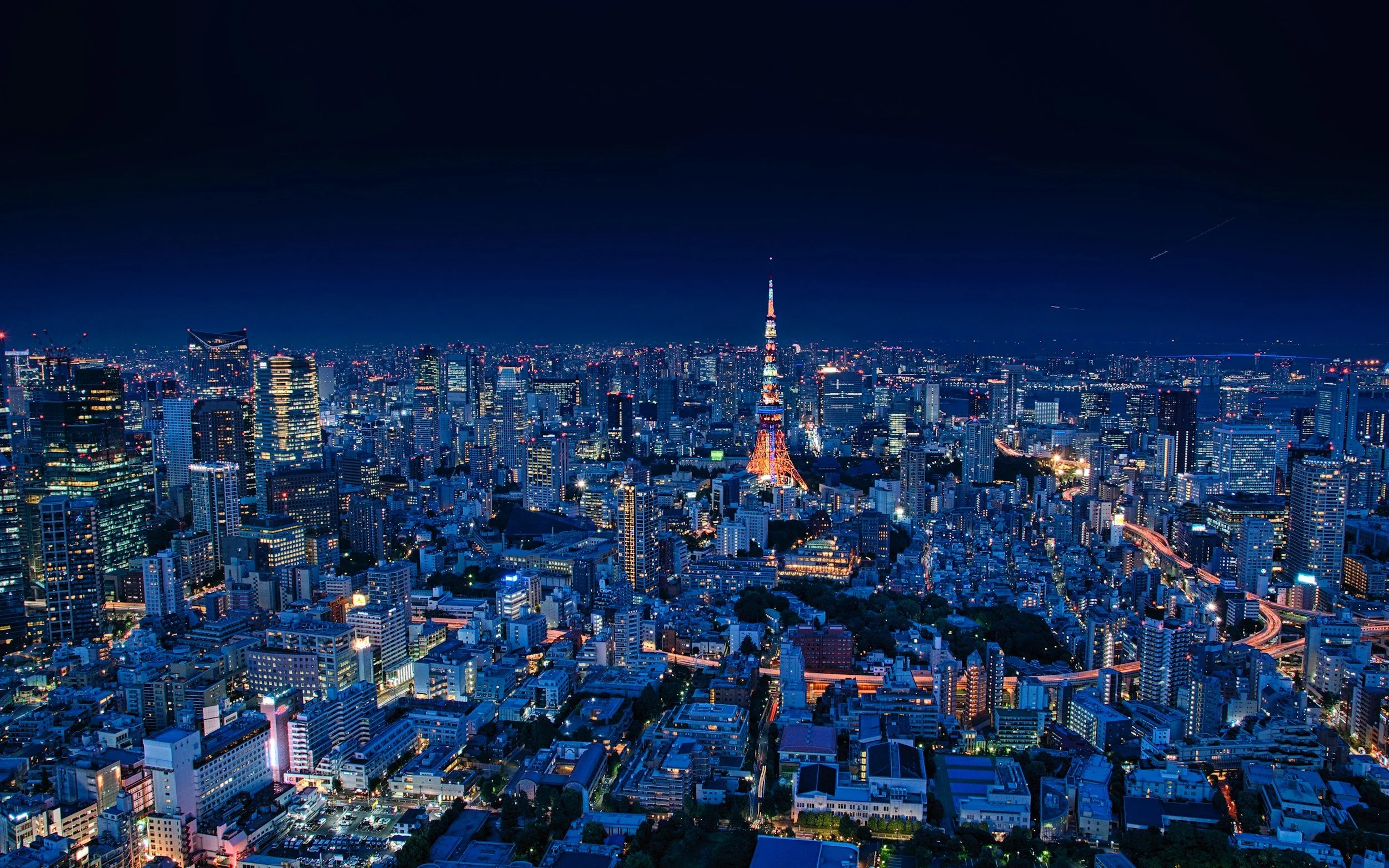
Tokyo's best hotel views divide cleanly by subject: Tokyo Tower close enough to fill the window, the Imperial Palace gardens spread below a breakfast table, Rainbow Bridge and the bay from an Odaiba waterfront room, or Mount Fuji at the horizon on a clear winter morning from Shinjuku. The 24 hotels below were selected because the view is the point — not incidental to the room, but the reason for it.
The Views
Hotels We’d Book for the View Alone
The Prince Park Tower Tokyo
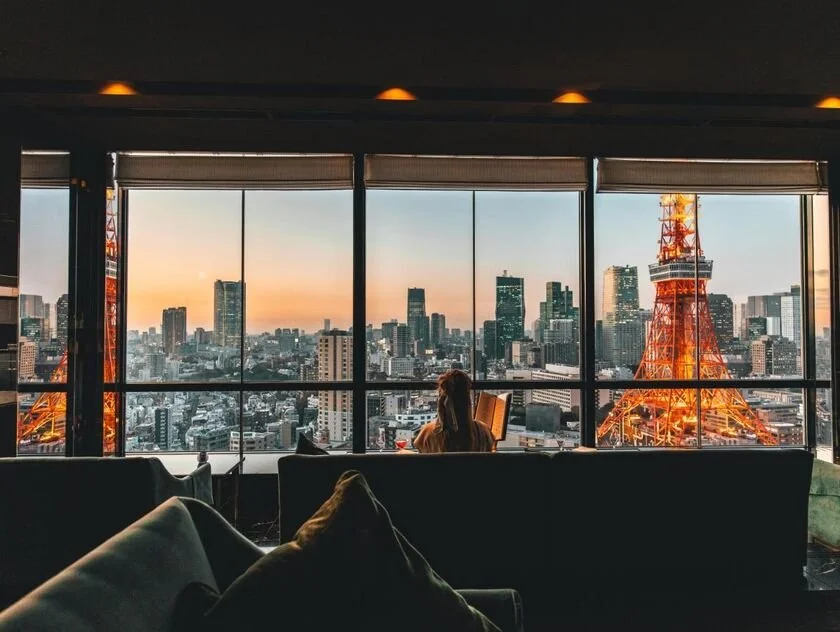
Tokyo Tower at such close range that upper rooms function as private observation decks — the red-and-white lattice fills the window at a scale photographs don’t prepare you for. A Tower View room keeps the structure in frame through the evening, when the lights shift from white to orange at 11 PM.
The Tokyo EDITION, Toranomon
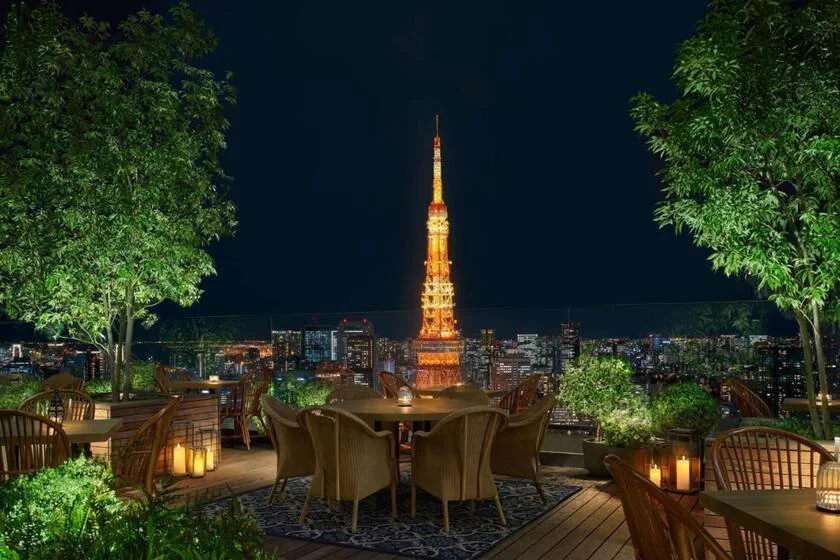
In the World Gate skyscraper, Tokyo Tower’s silhouette appears from every angle — the hotel’s signature cream curtains frame the view without competing with it. The 31st-floor lobby arrival in the evening is the right sequence — the cityscape settles into the room before dinner at Afternoon Tea.

Andaz Tokyo Toranomon Hills
Floors 47 to 52 of the Toranomon Hills Mori Tower put the entire Tokyo skyline at window height — floor-to-ceiling glass on all sides, with Tokyo Bay to the south and the city’s geometric interior spreading in every other direction. Request the highest available room and time the stay for sunset — the moment the lit grid replaces the daylight geometry is the one to catch from here.

Park Hotel Tokyo
The 25th-floor lobby overlooks Tokyo Tower directly, and the guest floors above extend to the 34th with the tower in unobstructed frame. The Artist-in-Residence rooms add a second layer: Japanese artists painted directly on the walls, turning the city outside into context rather than subject. One of those rooms, held long enough to understand both, is the case for Park Hotel.

The Aoyama Grand Hotel
In Aoyama, where the city’s residential skyline faces Tokyo Tower across the low-rise Meiji Shrine grounds, the upper floors here catch the tower in a frame that mid-city hotels can’t replicate. A higher room, with Belcomo on the ground floor before the walk to Omotesando, is the right sequence.

Hotel Toranomon Hills, The Unbound Collection by Hyatt
Floors 11 through 14 of the Toranomon Hills Station Tower — a 266-meter structure designed by Shohei Shigematsu of OMA — offer city views with the context of one of Tokyo’s newest architectural landmarks around you. The elevated walkways connecting the complex make for the right arrival sequence; the boutique scale is the reason to choose this over the towers nearby.

Park Hyatt Tokyo
Sofia Coppola filmed Lost in Translation here, and the rooms on floors 39 to 52 of Shinjuku Park Tower reopened in December 2025 after a 19-month renovation led by Studio Jouin Manku — the panorama that made New York Bar on the 52nd floor famous is intact, Mount Fuji visible on clear mornings, the NTT Docomo Yoyogi Building anchoring the foreground. Request the highest available room; the elevation is what this address is built around.

The Okura Tokyo
A $1 billion renovation in 2019 gave the Okura two buildings on a rare one-hectare garden sanctuary in Toranomon — the 41-floor Prestige Tower adds altitude to a green perspective that most Tokyo hotels can’t offer. A high floor facing the garden, with the Orchid Bar as the reason to stay through the evening.
Four Seasons Hotel Tokyo at Otemachi
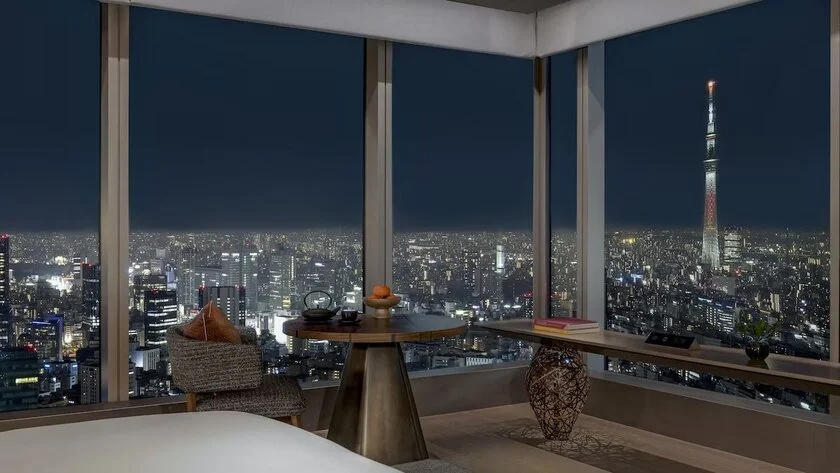
The Imperial Palace gardens spread beneath from the summit of this 39-story tower — centuries-old moat, resident swans, the city’s most visible green space from a window where, on clear days, Mount Fuji claims the horizon. A Palace-facing room on the highest available floor, timed for late afternoon when the gardens hold their best light.

Mandarin Oriental, Tokyo
The two-story lobby on the 38th floor of Cesar Pelli’s Nihonbashi Mitsui Tower introduces the city panorama immediately on arrival. A high floor, with Signature reserved for the same evening — the view and the kitchen both justify the combination, and arriving at dusk gives the room time to settle before dinner.
Shangri-La Tokyo
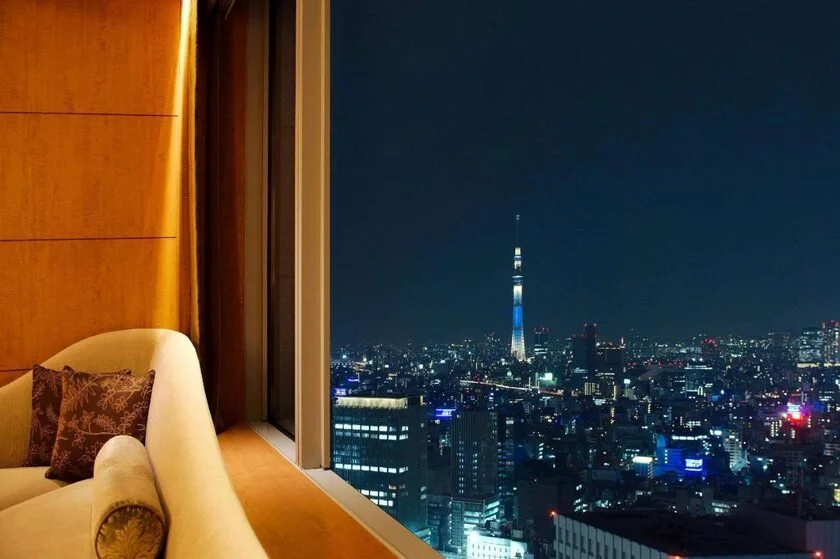
The top eleven floors of the Marunouchi Trust Tower Main, steps from Tokyo Station — the 28th-floor arrival is framed by crystal chandeliers and city views at once. A room facing the Tokyo Station historic building, with Nadaman for dinner — the evening light over the station’s brick dome is the right way to close the first day.
Bulgari Hotel Tokyo
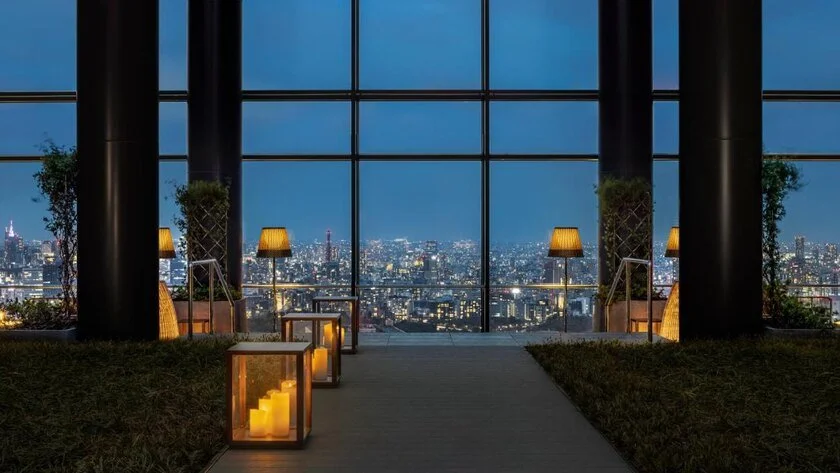
Floors 40 to 45 of the Tokyo Midtown Yaesu Tower, opposite Tokyo Station’s Yaesu exit — a position that places the city’s historic rail infrastructure in frame from above. A room on the upper floors, with Il Bar as the initial orientation before deciding which of the city’s corridors to follow.
mesm Tokyo, Autograph Collection
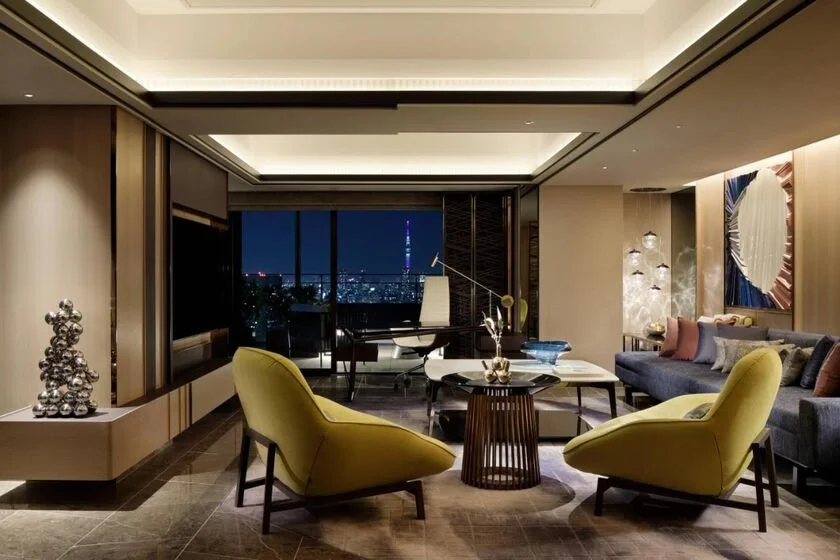
The Waters Takeshiba development puts Tokyo Bay and the city’s edge in the same frame from floors 16 to 26, with the Rainbow Bridge visible from bay-facing rooms. A bay-facing room, with the Mercury Bar for the transition between afternoon light over the water and the city’s evening illumination.

The Gate Hotel Asakusa Kaminarimon by Hulic
Steps from the Kaminarimon Gate, the rooftop terrace looks directly over Senso-ji’s pagoda with Tokyo Skytree rising beyond — the same view that draws photographers below, from an elevation where the temple complex’s scale becomes clear. The rooftop early morning, before the crowds arrive, with the rest of the day open.

The Peninsula Tokyo
A rare freestanding structure in Marunouchi, wrapped in Namibian black granite and lit at night like a Japanese lantern — from the upper floors the Imperial Palace moat reflects both the building and the sky. A corner suite, with Peter on the 24th floor for the initial view before deciding how long to stay.

The Ritz-Carlton, Tokyo
The top nine floors of Midtown Tower’s 248-meter structure, with the Club Lounge on the 53rd floor holding the clearest Mount Fuji sight line in the building on clear days. A Club Room for the altitude, with Hinokizaka for dinner — the lit Roppongi district across the full width of the window at that hour makes the room the right end to a day.

Palace Hotel Tokyo
The 23-story tower faces the Imperial Palace moat directly — resident swans, centuries-old gardens, the city’s most photographed green space from a single window. A Palace-facing room held through both the evening light over the gardens and breakfast the following morning — the view changes enough between the two to justify the overnight.

Imperial Hotel Tokyo
Opposite the 40-acre Hibiya Park and a short walk from the Imperial Palace, the Main Building overlooks one of the city’s most consistent green corridors. The Tower Building is under long-term reconstruction — the current quieter configuration makes this a good moment to stay, with the Old Imperial Bar as the reason to arrive before dinner.
Conrad Tokyo
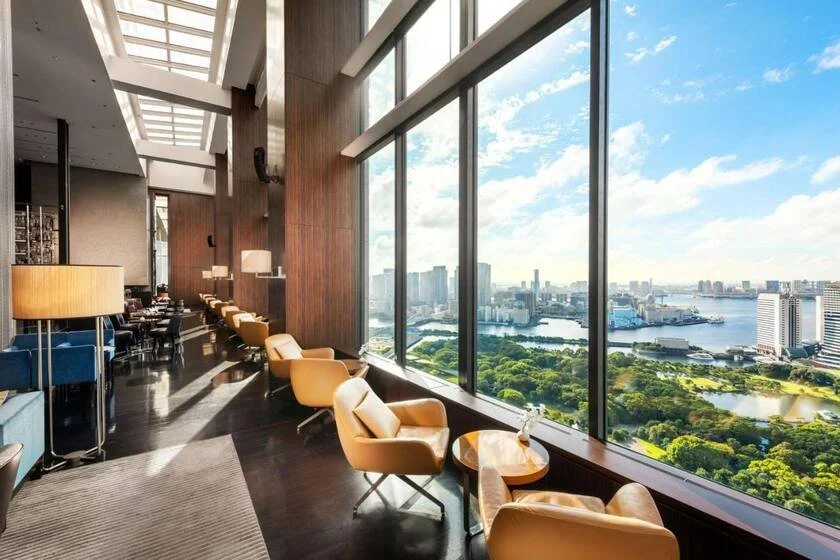
23-foot windows at the top of the Shiodome Building frame Rainbow Bridge, Tokyo Bay, and the city’s interior skyline from the same glass — a view that changes across the day and pays back more attention than most. A bay-facing room, with Gordon Ramsay at Conrad Tokyo for the evening — the tower’s height at that hour makes the bay look architectural.

The Capitol Hotel Tokyu
Adjacent to the centuries-old Hie Shrine in Akasaka, this property combines shrine views — cedar grove, vermilion torii gates, stone lanterns — with the city skyline rising behind. A shrine-facing room, with the Hie Shrine’s torii tunnel approach before dinner at Origami on the lobby floor.

TRUNK(HOTEL) Yoyogi Park
Tokyo’s largest urban forest as the view rather than the skyline — this intimate property faces Yoyogi Park directly, offering something the city’s tower hotels can’t: green at eye level. A park-facing room, the rooftop before the city wakes, and the afternoon in the contrast Shibuya provides five minutes away.

Grand Nikko Tokyo Daiba
From the shores of Tokyo Bay, this 30-story hotel frames Rainbow Bridge, the city skyline, and Mount Fuji in a single bay-facing panorama — the kind of view where the subject changes with the hour and the weather. A bay-facing room, with the SkyLounge Stellar on the top floor for the evening transition from daylight to the lit city reflecting across the water.
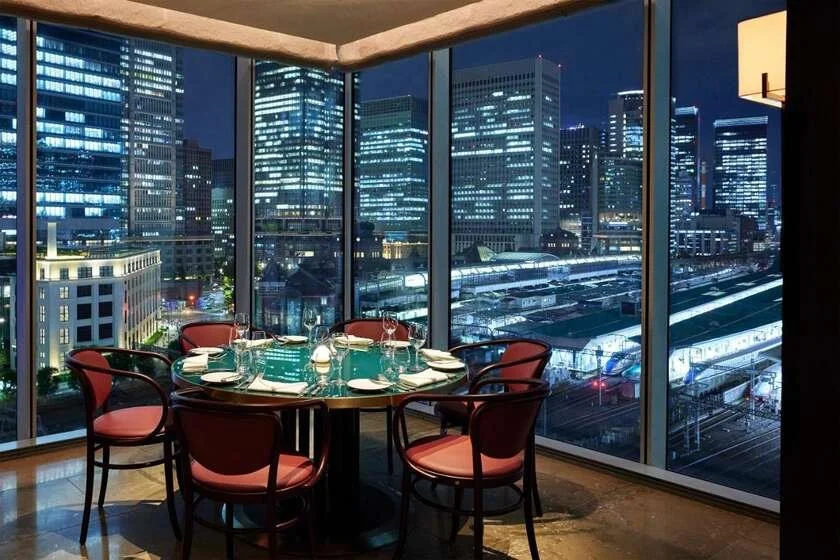
Four Seasons Hotel Tokyo at Marunouchi
Sixty rooms across six floors of the Pacific Century Place skyscraper, with triple-glazed windows turning the Tokyo Station district into silent theater below. The highest available suite, with Motif for dinner — the station’s brick dome at close range from above is a perspective that altitude usually removes rather than provides.
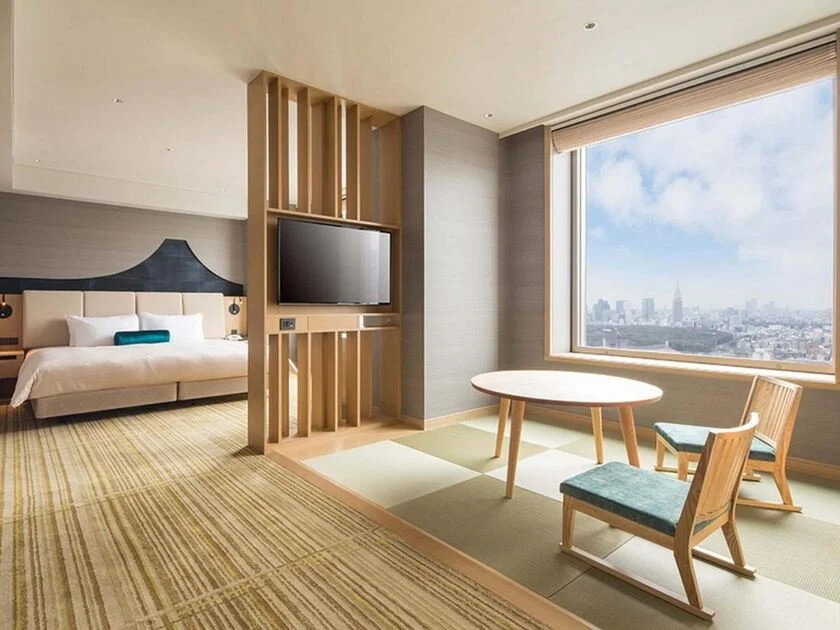
Cerulean Tower Tokyu Hotel
The 40-story silhouette above Shibuya puts the city’s most energetic district in frame from a height where the famous scramble crossing becomes a pattern rather than a crowd. A city-facing room on the upper floors, the Noh theatre in the basement before dinner at Sakuragaoka — the contrast between the two is what Cerulean Tower does best.
What Travelers Ask About Tokyo
Tokyo’s best view hotels cluster in four distinct corridors, each with a different subject and altitude.
Toranomon and Marunouchi concentrate the highest density of top-floor properties: Andaz Tokyo Toranomon Hills on floors 47–52, Four Seasons Hotel Tokyo at Otemachi facing the Imperial Palace gardens, Mandarin Oriental, Tokyo and Shangri-La Tokyo in the Marunouchi/Nihonbashi corridor, and Bulgari Hotel Tokyo opposite Tokyo Station. For proximity to Tokyo Tower specifically, The Prince Park Tower Tokyo in Shiba Park stands alone — the tower is close enough that upper rooms read more as observation decks than hotel rooms.
Shinjuku is where altitude meets scale: Park Hyatt Tokyo on floors 39–52 of the Shinjuku Park Tower frames a panorama that includes Mount Fuji on clear days. For a bay perspective, Odaiba offers Grand Nikko Tokyo Daiba with Rainbow Bridge, the city skyline, and Mount Fuji from the same window. In Asakusa, The Gate Hotel Asakusa Kaminarimon by Hulic is the address for a rooftop view over Senso-ji with Tokyo Skytree behind it.
Tokyo Tower reads differently depending on distance and angle — several hotels on this list have distinct relationships with it.
For sheer proximity, The Prince Park Tower Tokyo in Shiba Park is the answer: the hotel sits so close to the tower that upper rooms function as private observation decks, and the 333-meter structure fills the window at a scale photographs don’t prepare you for. Park Hotel Tokyo in Shiodome positions the tower as the lobby’s direct sightline from the 25th floor, with guest rooms above extending the view through the 34th floor. The Tokyo EDITION, Toranomon frames the tower’s silhouette through the World Gate skyscraper’s glass — closer in terms of sightline than distance.
For views that include Tokyo Tower as part of a wider panorama, The Ritz-Carlton, Tokyo in Midtown Tower, Park Hyatt Tokyo in Shinjuku, and The Aoyama Grand Hotel all include it in a skyline frame rather than as the sole subject.
Mount Fuji is visible from Tokyo on clear winter days, typically from November through early April — the view depends on altitude, orientation, and atmospheric conditions on the day.
Among the hotels on this list, Park Hyatt Tokyo has the most established Fuji sight line: its position on floors 39–52 of the Shinjuku Park Tower, on the western side of the city, gives it direct alignment with the mountain on clear mornings. The Ritz-Carlton, Tokyo’s 53rd-floor Club Lounge is documented for Fuji visibility, and Four Seasons Hotel Tokyo at Otemachi has a palace garden view that includes Fuji at the horizon on pristine days. Grand Nikko Tokyo Daiba faces west across the bay, which on the clearest days puts Fuji above the horizon behind Rainbow Bridge.
The practical qualification: Fuji is never guaranteed from any hotel in Tokyo, and the mountain is more often haze-obscured than visible. Winter mornings after cold fronts pass through offer the clearest conditions.
Several hotels on this list offer bay views, though the quality depends significantly on altitude and orientation.
The most dedicated bay perspectives come from two addresses: Grand Nikko Tokyo Daiba on the Odaiba waterfront, where bay-facing rooms at height frame Rainbow Bridge and the city skyline in a single panorama, and mesm Tokyo, Autograph Collection in Waters Takeshiba, where floors 16 to 26 put the bay and the city’s edge in the same frame with the bridge visible from the right rooms. Conrad Tokyo in Shiodome adds a third option — its 23-foot windows frame Rainbow Bridge, Tokyo Bay, and the interior skyline simultaneously from the top of the Shiodome Building.
From higher altitude and greater distance, Andaz Tokyo Toranomon Hills on floors 47–52 and several other Toranomon-area properties include the bay in their southern panorama without making it the primary subject.
Tokyo’s hotel bars at altitude are some of the most consistent high-level views the city offers, and several are worth visiting independently of a stay.
New York Bar at Park Hyatt Tokyo on the 52nd floor of the Shinjuku Park Tower is the most celebrated — made famous by Lost in Translation, it offers live jazz alongside a panorama that includes the NTT Docomo Yoyogi Building and, on clear evenings, Mount Fuji. The entrance fee applies to non-guests but the view justifies it. At The Ritz-Carlton, Tokyo, the Club Lounge on the 53rd floor of Midtown Tower holds a Fuji sight line that the bar programs around on clear mornings.
SkyLounge Stellar at Grand Nikko Tokyo Daiba occupies the top floor and frames the bay, Rainbow Bridge, and the city skyline — accessible to non-guests for dinner. Peter at The Peninsula Tokyo on the 24th floor provides one of the better elevated views of the Imperial Palace area from a bar setting. Most of these venues accept non-guest reservations, though advance booking is recommended on weekend evenings.
Tokyo’s view hotels perform differently across the seasons, and the best timing depends on what kind of view you’re after.
Winter (December–February) offers the clearest air and the highest probability of seeing Mount Fuji from altitude — cold fronts sweep through the Kanto Plain and leave remarkable visibility in their wake. Properties with western exposures like Park Hyatt Tokyo get the most out of clear December and January mornings. Spring (late March–April) brings cherry blossom season: The Okura Tokyo’s garden, the Imperial Palace surroundings visible from Palace Hotel Tokyo and Four Seasons Hotel Tokyo at Otemachi, and Yoyogi Park below TRUNK(HOTEL) Yoyogi Park all gain a particular character in the two weeks when the trees are in bloom.
Autumn (October–November) combines clear light with moderate temperatures — the city’s air quality improves after the humid summer, and rooftop terraces become usable again. Summer is the most challenging season for views: humidity reduces visibility significantly. Hotels with bay views — Grand Nikko Tokyo Daiba, mesm Tokyo, Autograph Collection, Conrad Tokyo — benefit from the water’s cooling effect and the evening light on the bay.
Tokyo’s view hotel landscape is broad, and a genuinely compelling outlook doesn’t require the very top of the market.
At the higher end, Four Seasons Hotel Tokyo at Otemachi and Park Hyatt Tokyo set the standard for view quality at altitude — Palace gardens and Mount Fuji from the former, the full Shinjuku skyline from the latter. Mandarin Oriental, Tokyo, Shangri-La Tokyo, and The Ritz-Carlton, Tokyo occupy a comparable tier with panoramic city views. Bulgari Hotel Tokyo represents the newest entry at the top, with views of the Tokyo Station area from floors 40–45.
Further down, Park Hotel Tokyo in Shiodome offers direct Tokyo Tower views from the 25th-floor lobby and above — a property whose rates sit below the flagship towers while delivering a view that holds its own against them. The Gate Hotel Asakusa Kaminarimon by Hulic is the most targeted option on this list: a rooftop with Senso-ji and Skytree in the same frame, at a price point that leaves room for the rest of the trip. Cerulean Tower Tokyu Hotel in Shibuya completes the range for travellers who want an elevated perspective without a top-tier rate.
In most Tokyo view hotels, the answer is yes — and the difference between a standard room and a view room can be significant enough to justify the request at booking rather than on arrival.
At The Prince Park Tower Tokyo, rooms labelled “Tower View” face Tokyo Tower directly; standard rooms may look toward the city without the tower in frame. At Park Hotel Tokyo, rooms above the 27th floor and on the tower side face Tokyo Tower; rooms on the opposite side do not. At Four Seasons Hotel Tokyo at Otemachi, “Palace-facing” rooms overlook the Imperial Palace gardens; city-facing rooms look toward the Marunouchi skyline — both are strong, but different. At Grand Nikko Tokyo Daiba, bay-facing rooms frame Rainbow Bridge; rooms on the opposite side face the city interior.
The practical approach: specify the view type explicitly in the special requests field at booking, confirm it with the property one to two days before arrival, and if possible contact the concierge directly. Japanese hotels — particularly at the luxury level — take special requests seriously, and the probability of fulfilment is higher with advance notice than with a request made at check-in.