
Osaka Hotels With Views
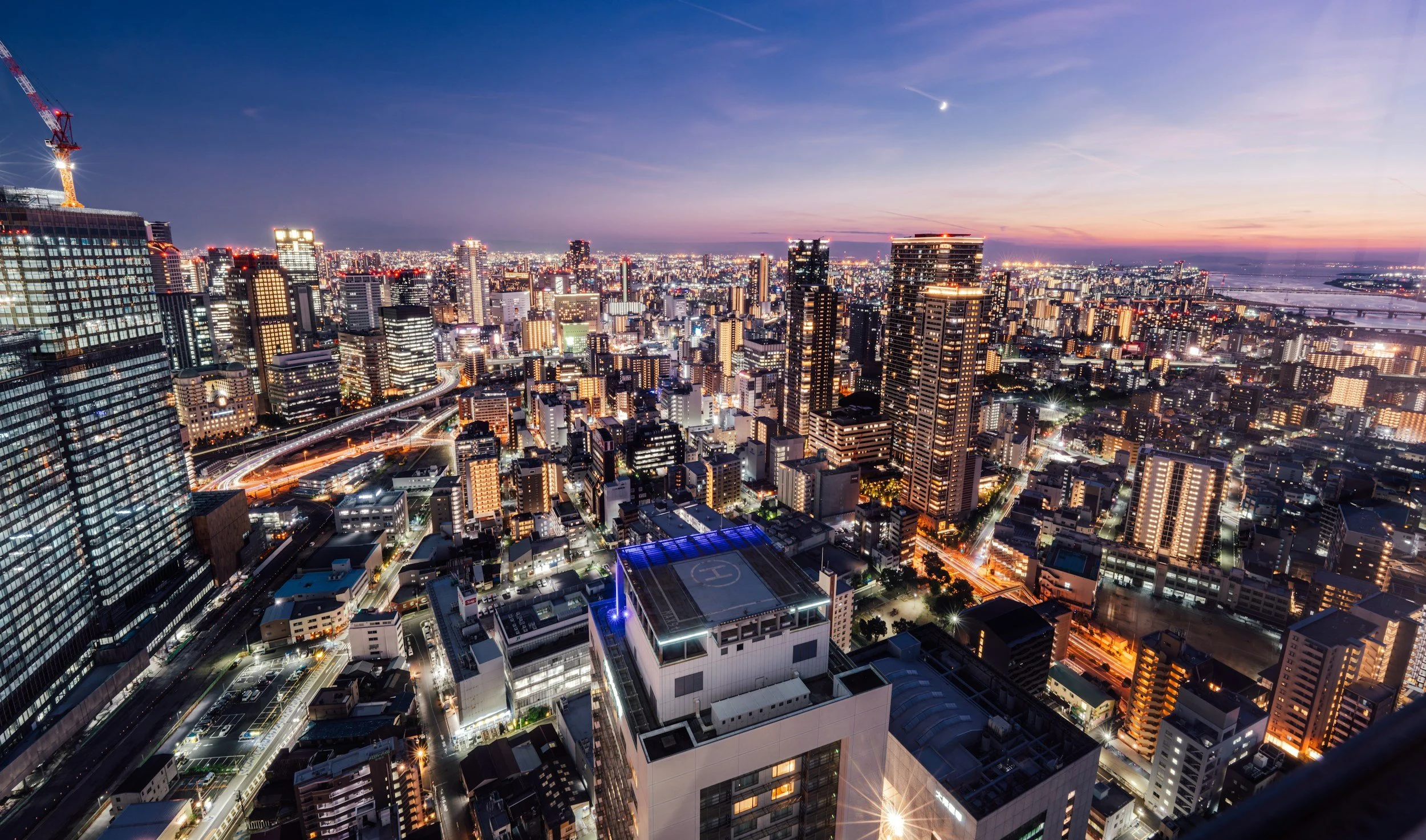
Osaka organizes its hotel views around three distinct subjects: Osaka Castle to the east, the neon canal at Dotonbori, and the open bay to the west. The fourteen hotels on this list were chosen because one of these views — or all three — defines the stay.
The Views
Hotels We’d Book for the View Alone

Waldorf Astoria Osaka
Japan’s first Waldorf Astoria, open since April 2025. Every room starts at the 31st floor — city and bay views, Art Déco interiors fused with Japanese design. The 30th-floor pool faces the bay. Worth requesting a Corner Suite for the full wrap-around spread.

Four Seasons Hotel Osaka
Opened in August 2024, this sailboat-shaped tower puts all 154 rooms on its upper six floors — every one facing the Osaka skyline. The 28th-floor GENSUI ryokan suites frame the city through shoji screens. The room to ask for is a corner: Yodo River on one side, city on the other.
Osaka Marriott Miyako Hotel
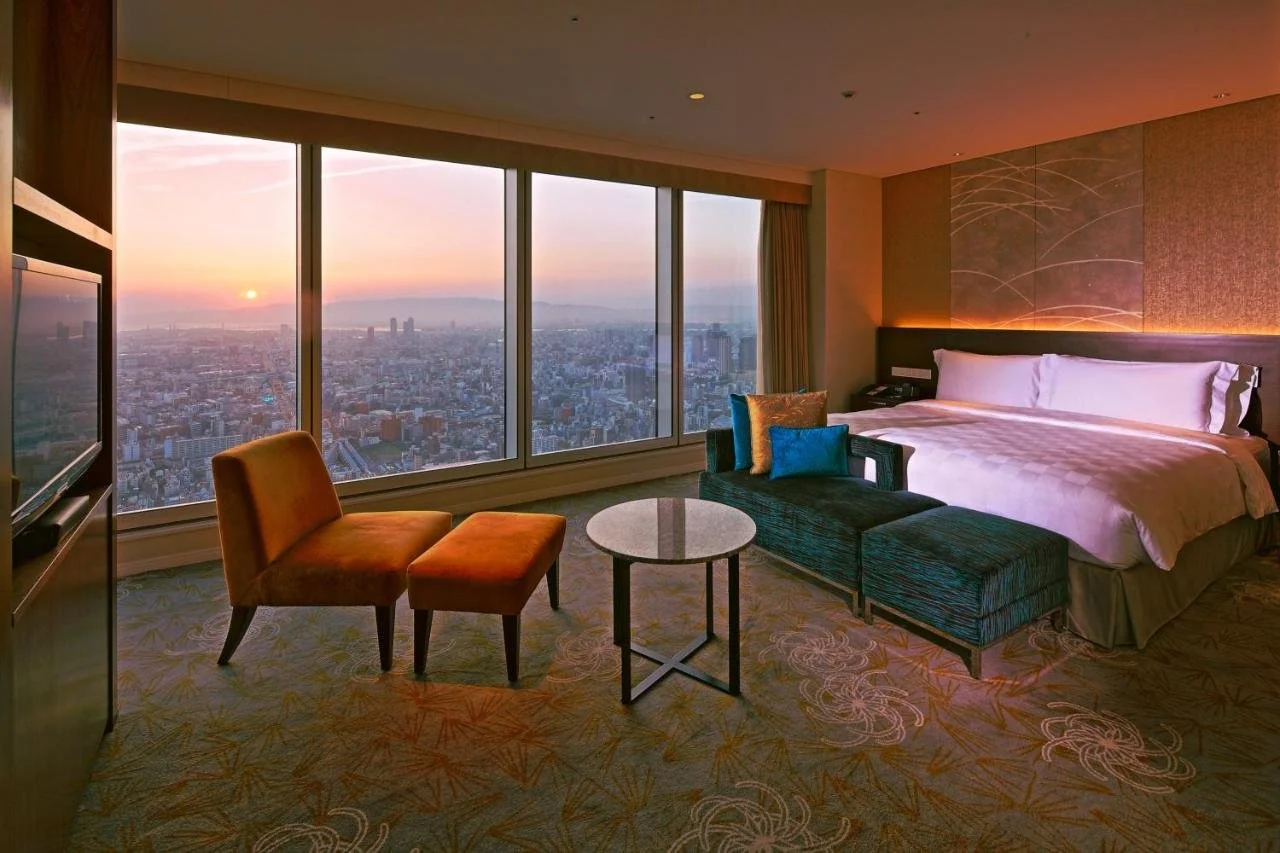
Floors 38 to 57 of Abeno Harukas — Osaka’s tallest skyscraper — mean every room here has the view by default. No category disappoints, but the 53rd-floor corner Executive Suite is the one to hold out for: panoramic from the bed, panoramic from the bathtub.
W Osaka
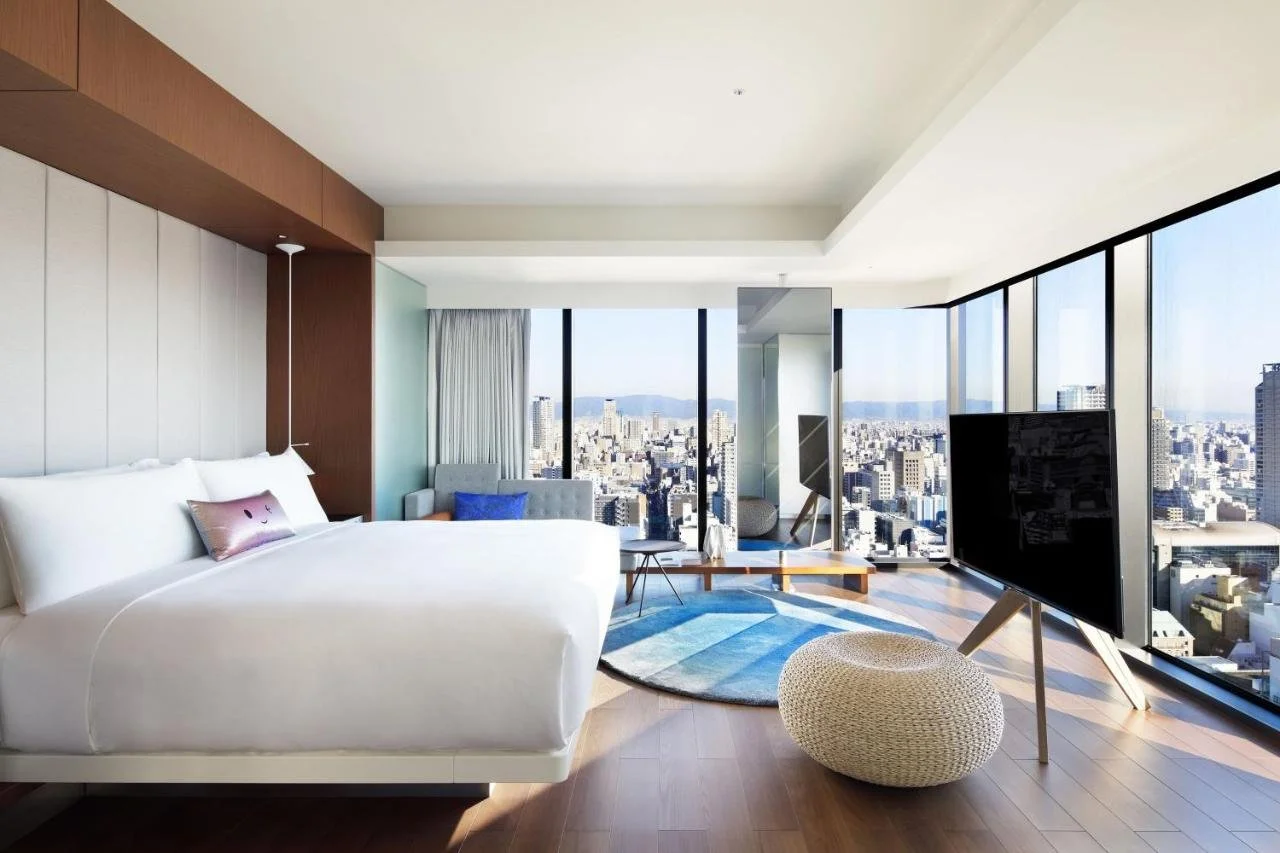
Tadao Ando’s black-facade tower rises 27 floors above Midōsuji. All 337 rooms face the city through floor-to-ceiling — and in some cases wall-to-wall — windows. We’d book a Wonderful Suite for the full skyline spread, and the Dotonbori lights below after dark.

Conrad Osaka
Sitting on an island between the Tosabori and Dōjima rivers, the Conrad occupies the top floors of Nakanoshima Festival Tower West. All 164 rooms start from the 33rd floor. The 40th-floor C Grill has telescopes — a deliberate nod to the observatory-grade views.

Swissôtel Nankai Osaka
Sitting on top of Namba Station, 39 floors above the city’s most frenetic district. North-facing rooms pick up the Ebisu Tower Ferris Wheel; the Waon Suite King and Prestige King Suite add 33rd-floor lounge access. Table36 on the top floor is worth the window table.

The Royal Park Hotel Iconic Osaka Midosuji
The split is worth knowing: standard floors run from 16 to 23, executive floors from the 24th up — the latter with more dramatic skyline spread and access to the 25th-floor lounge where breakfast lines up with the sunrise. Executive category is the clear call.

The St. Regis Osaka
The 160 rooms here are among the most spacious in the city — and all face the Osaka skyline. The top-floor Matsu and Royal suites are the headline act, but the 12th-floor La Veduta restaurant, Italian and view-facing, makes a strong case for lingering at dinner.

InterContinental Osaka by IHG
A 33-floor Umeda address where all rooms face the city and select rooms pick up the Hep Five Ferris Wheel from across the district. The 20-meter pool is among the largest in Osaka’s hotel landscape. Pierre, the fine dining restaurant, earns its window table.

The Ritz-Carlton, Osaka
Sixty-two rooms and suites across floors 33 to 35 — a deliberately intimate upper-floor enclave. The Club Lounge on the 34th is the view perch of choice; the Japanese Suite, tatami-floored and Hinoki-panelled, frames the city in a way no standard room can.

Hotel Hankyu International
Views start from the 26th floor and build steadily upward. The Club accommodations on the 33rd and 34th floors are the ones worth holding out for: Hep Five Ferris Wheel visible from the lounge, complimentary breakfast, and a quieter pocket of Umeda below.

Cross Hotel Osaka
The Glico Running Man sign has faced Ebisubashi Bridge since 1935 — and the Cross Hotel’s Dotonbori View rooms face it directly from the other side. The room category name says it all: book it and the sign is yours, neon and all, from curtain-open to lights-out.

ART HOTEL Osaka Bay Tower
Fifty-one floors above Osaka Bay, this is the city’s definitive altitude-and-water combination. We’d request a Sky Floor room (46F–50F) for the full 360° spread — bay, skyline, and on clear days, the Akashi Kaikyō Bridge tracing the horizon to the west.

Hotel New Otani Osaka
Suites on floors 14 to 16 face Osaka Castle Park with nothing in the way — the clearest castle view available from any hotel in the city. The outdoor pool faces the same direction; at night, the illuminated keep reflected on the water is the evening’s entertainment.
What Travelers Ask About Osaka
Osaka’s hotel landscape organizes itself around three distinct zones, each producing a different kind of view.
In Umeda/Kita Ward, the concentration of tall towers delivers the most consistent city panorama. The Waldorf Astoria Osaka, Four Seasons Hotel Osaka, Conrad Osaka, The Ritz-Carlton, Osaka, InterContinental Osaka by IHG, and Hotel Hankyu International all operate from this district. Floor heights here range from the mid-twenties to the mid-forties, and north-facing rooms from several properties include the Hep Five Ferris Wheel as a foreground landmark.
Chuo Ward covers the ground between the financial district and Dotonbori, producing a different register: either the Tosabori and Dōjima rivers framing Nakanoshima (the Conrad Osaka, from the 33rd floor) or the Dotonbori canal’s neon strip at close range — the W Osaka along Midōsuji and Swissôtel Nankai Osaka above Namba Station both operate here. The St. Regis Osaka and The Royal Park Hotel Iconic Osaka Midosuji occupy the zone between these two poles.
Abeno Ward stands apart: the Osaka Marriott Miyako Hotel occupies floors 38 to 57 of Abeno Harukas, Osaka’s tallest skyscraper, with views extending in all directions without a competing tower in range. Hotel New Otani Osaka, in the castle district to the east, offers the specific and singular view of Osaka Castle Park — a different proposition from the skyline hotels, but one that operates on its own terms.
The Hotel New Otani Osaka is the clear answer. The castle suites on floors 14 to 16 face Osaka Castle Park without obstruction — no other hotel on this list places the castle at the center of the view rather than the edge of it.
The outdoor pool faces the same direction, and at night the illuminated keep reflects on the water below. Other properties in the Kita Ward or Chuo Ward include the castle only as a distant element within a wider skyline; the New Otani makes it the focal point by design and by position. For travelers whose reason for visiting Osaka is the castle itself, the hotel’s address in the castle district answers the question before anything else does.
Several properties on this list offer pools worth noting beyond standard amenities.
The Waldorf Astoria Osaka’s 30th-floor infinity pool faces Osaka Bay — a water view at altitude that few city hotels in Japan can replicate. The InterContinental Osaka by IHG holds one of the city’s larger hotel pools at 20 meters, city-facing within the Umeda district. The Hotel New Otani Osaka’s outdoor pool faces the castle park directly, which makes it the most specific pool view on the list.
The Conrad Osaka, positioned on Nakanoshima island between two rivers, integrates its spa and pool within the riverine setting. For pool-forward travel, the Waldorf’s bay-facing facility is the standout — open since April 2025, it adds a dimension to Osaka’s luxury pool offer that had previously been limited to city or castle outlooks.
The Cross Hotel Osaka is the most specific case. Its Dotonbori View room category was built for exactly this purpose, facing the Glico Running Man sign directly from across the Ebisubashi Bridge. The sign has occupied the same position since 1935; the Cross Hotel puts it at the center of the view rather than the periphery. There is no other hotel on this list where a standard room category is defined by a single landmark at this level of proximity.
The Swissôtel Nankai Osaka, sitting above Namba Station 39 floors up, offers a wider view of the Dotonbori district below — more panoramic and less intimate than the Cross, but with the Ferris Wheel added on the northern side. The W Osaka along Midōsuji captures Dotonbori’s nighttime illumination from a higher and more removed vantage point.
Two properties opened in 2024 and 2025 represent the most significant recent additions to Osaka’s luxury hotel landscape.
The Four Seasons Hotel Osaka opened in August 2024 in a sailboat-shaped tower in Kita Ward, placing all 154 rooms across the building’s upper six floors. The GENSUI ryokan suites on the 28th floor — shoji screens, tatami, skyline views — are a specific type of room that blends the brand’s international standard with a Japanese spatial sensibility not available elsewhere in the city. Corner rooms add the Yodo River to one side and the city spread to the other.
The Waldorf Astoria Osaka opened in April 2025 as the brand’s first Japan property. Positioned in the Grand Green Osaka development adjacent to Umeda Station, it occupies floors 31 and above with Art Déco interiors fused with Japanese design, and a 30th-floor bay-facing infinity pool. Both properties are operating without the review history of the more established names on this list, which makes them a considered choice for travelers willing to book before consensus forms around them.
Osaka has two landmark ferris wheels that appear in views from specific properties on this list.
The Hep Five Ferris Wheel in Umeda — identifiable by its red structure attached to a shopping complex — is visible from several Kita Ward hotels. The InterContinental Osaka by IHG includes it as a foreground feature in select rooms. The Hotel Hankyu International’s 33rd and 34th-floor Club accommodations have it visible from the lounge. The Swissôtel Nankai Osaka’s north-facing rooms capture it across the district from a southerly position in Namba.
The Tempozan Giant Ferris Wheel near Osaka Bay is best seen from the ART HOTEL Osaka Bay Tower, where Sky Floor rooms on floors 46 to 50 frame the bay, the Akashi Kaikyō Bridge on clear days, and the wheel within a 360° panorama. Neither wheel dominates a view the way a castle or river might — they function as orientation landmarks that give Osaka’s skyline a specific character of its own.
The comparison depends on what kind of view you’re after.
Kyoto’s hotel landscape is defined by gardens, temple rooftops, and the Higashiyama hillside — views here are horizontal and intimate rather than vertical and panoramic. The Osaka that this list covers operates differently: it is a city of towers, water, and neon, and the hotels positioned within that landscape deliver a quality of elevated urban view that Kyoto cannot replicate. Both cities are worth the visit; they are not substitutes.
Compared to Tokyo, Osaka’s view hotels are more concentrated and, in many cases, easier to access for a comparable floor position and panorama. Tokyo has more five-star options and a wider range of landmark-specific views, but Osaka’s combination of castle park, bay, riverine districts, and canal culture gives its views a coherent identity that Tokyo’s larger, more dispersed geography doesn’t always produce. For travelers whose primary interest is an elevated, urban view with strong nighttime visual character, Osaka is a serious case.
Osaka’s view hotel market is anchored by major luxury brands, but it is not restricted to them.
The Cross Hotel Osaka (4★) offers a specific and singular proposition — the Dotonbori View room category faces the Glico Running Man sign directly — at rates that sit well below the five-star properties on this list. It is the one hotel here where a standard room category justifies the stay on view terms alone, without requiring an upgrade.
The ART HOTEL Osaka Bay Tower (4★) provides 51 floors of altitude above Osaka Bay, with Sky Floor rooms between the 46th and 50th floors at rates substantially lower than the city-center luxury properties. The trade-off is the bay-side location, away from Dotonbori and Umeda — but for travelers whose primary interest is altitude and water, it is the most efficient option on this list. Among the five-star properties, the Swissôtel Nankai Osaka and The Royal Park Hotel Iconic Osaka Midosuji offer genuine upper-floor city views at rates that are frequently more accessible than the Four Seasons, Waldorf, or Ritz-Carlton. The Swissôtel’s Table36 restaurant is open to non-guests — making the view accessible without a room reservation.