
Abu Dhabi Hotels With Views
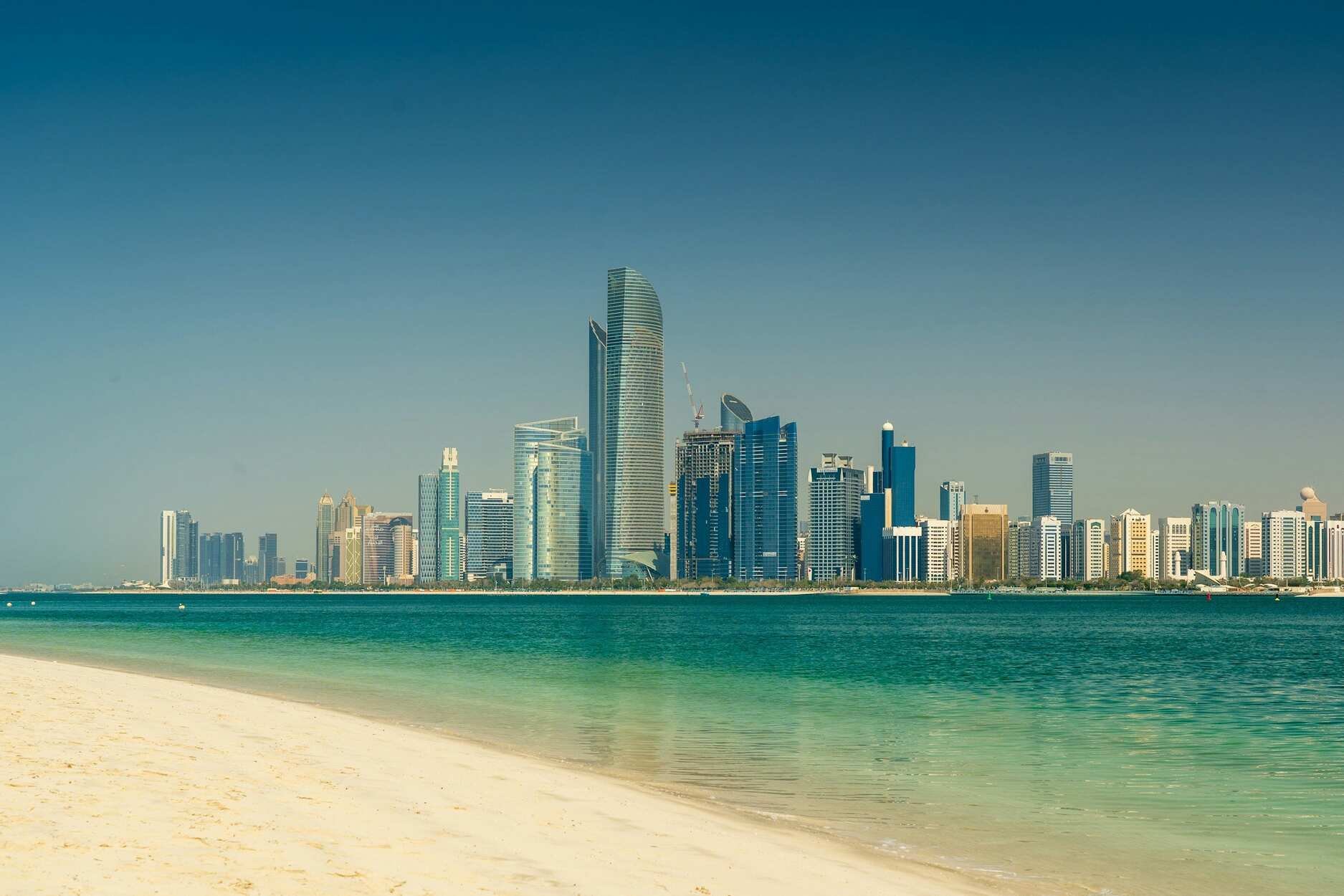
Shallow turquoise water, white sand, and a skyline built to be seen. The Grand Mosque visible from a hotel terrace at night, the Al Bateen marina after dark, Saadiyat's Gulf horizon — and the Zayed National Museum and the Yas Island parks close enough to reshape the itinerary without leaving the city behind. No wonder Abu Dhabi keeps drawing us back.
The Views
Hotels We’d Book for the View Alone
What Travelers Ask About Abu Dhabi
Abu Dhabi divides into four distinct view corridors, each with a different character.
Saadiyat Island is the choice for beach and open sea: white sand, turquoise Gulf water, and proximity to the Louvre Abu Dhabi. Its position also makes it the natural base for families combining beach luxury with a day at the Yas Island theme parks — Ferrari World, Warner Bros. World, and Yas Waterworld are a twenty-minute drive away.
The Corniche and Al Bateen deliver the urban panorama — Etihad Towers, yacht marinas, and a skyline that sharpens after dark. Al Maryah Island, Abu Dhabi’s financial district, sits between both worlds: the Four Seasons Hotel Abu Dhabi at Al Maryah Island and the Rosewood Abu Dhabi are the two properties here that combine a financial-district address with direct water frontage — suited to guests who want city access without sacrificing the Gulf horizon.
For a view that centres the Sheikh Zayed Grand Mosque, the Al Maqta’ area stands alone — the Shangri-La Qaryat Al Beri, Abu Dhabi is the only property in the city where the mosque reads as a constant presence rather than a nearby excursion: from check-in to last drink, the domes anchor the view.
Several of the city’s top view hotels combine their sea outlook with a private beach — a meaningful distinction in a destination where public beaches, while good, sit away from the main hotel corridor.
On Saadiyat Island, Park Hyatt Abu Dhabi Hotel and Villas and Jumeirah at Saadiyat Island Resort front directly onto one of the Gulf’s finest stretches of white sand. Along the Corniche and Al Bateen, Emirates Palace Mandarin Oriental, Abu Dhabi, Khalidiya Palace Rayhaan by Rotana, Abu Dhabi, and The St. Regis Abu Dhabi each maintain private beaches that extend the view from the room to the water’s edge.
The Grand Hyatt Abu Dhabi Hotel & Residences Emirates Pearl and Shangri-La Qaryat Al Beri, Abu Dhabi offer smaller private beach areas alongside their pool and waterway settings. Private beach access is generally reserved for hotel guests, though most properties allow day-use bookings for non-residents.
Among the hotels on this list, the Shangri-La Qaryat Al Beri, Abu Dhabi comes closest — the mosque sits across Khor Al Maqta’ at a distance where its scale registers fully, and the property is set low enough to keep it in frame from both the terrace and the bar rather than reducing it to a detail visible from a high floor.
For a more elevated perspective, the Fairmont Bab Al Bahr (not featured in our editorial but worth noting) positions rooms to face the mosque directly across Abu Dhabi Creek. The Ritz-Carlton Abu Dhabi, Grand Canal occupies the same waterfront corridor with similar sightlines. All three sit within minutes of the mosque, combining the view from the property with easy access to one of the UAE’s defining landmarks.
The city’s best hotel rooftop experiences are tied directly to their views.
Azura Panoramic Lounge at The St. Regis Abu Dhabi occupies the top of the Nation Towers, with the Corniche and Marina Mall spread below. The Observation Deck at 300 inside the Conrad Abu Dhabi Etihad Towers is technically a ticketed observation point rather than a bar — but at that altitude, the distinction matters less than the unobstructed 360° sweep it gives over the city and the sea.
Glo at the Rosewood Abu Dhabi gives the Gulf from Al Maryah Island’s edge at sunset. At the Abu Dhabi EDITION, The Annex Rooftop is the city’s marina bar in the most literal sense — the boats are close enough that the view changes as they move. On Saadiyat Island, Beach House at the Park Hyatt Abu Dhabi Hotel and Villas trades skyline for open water: no towers, no cranes, just the Gulf line to the west.
In most cases, yes. Abu Dhabi’s five-star hotels are generally open to non-residents for dining, afternoon tea, and drinks — which means access to some of the city’s most compelling views without a room reservation.
Azura Lounge at The St. Regis Abu Dhabi, Al Hanah Bar at the Shangri-La Qaryat Al Beri, Abu Dhabi, and The Annex at the Abu Dhabi EDITION all welcome walk-in guests, with reservations recommended for peak hours. The Emirates Palace Mandarin Oriental, Abu Dhabi is a destination in its own right — several restaurants and the famous gold-leaf cappuccino at Le Café are accessible without a stay.
The experience of watching the Grand Mosque’s domes illuminate from the terrace at Shangri-La Qaryat Al Beri, Abu Dhabi over an evening drink costs considerably less than the nightly room rate.
Among the hotels on this list, the Dusit Thani Abu Dhabi and the Royal M Hotel & Resort Abu Dhabi consistently price below the Emirates Palace and Four Seasons tier while maintaining Booking.com scores above 8.5. Both offer genuine Gulf views and beach access, and their rates reflect their position within the city’s hotel landscape rather than any compromise on quality.
The Andaz Capital Gate Abu Dhabi — a concept by Hyatt offers a more unusual proposition: rooms face the signature lean of the Capital Gate Tower — the world’s most inclined man-made structure — with the Arabian Gulf visible beyond. It trades iconic beach for architectural spectacle at a comparatively accessible price point.
Summer in Abu Dhabi — June through September — brings temperatures between 40°C and 45°C, with humidity that makes outdoor time genuinely challenging between mid-morning and late afternoon. The tradeoff is substantial.
Hotel rates drop by as much as 40–50% in July and August compared to peak season (November–February). The same rooms that command premium rates in winter become accessible at a fraction of the cost — and the views do not change with the season. The Gulf is as blue in August as it is in December; the Sheikh Zayed Grand Mosque as luminous at night.
The practical rhythm for a summer stay: mornings before 9am and evenings after 6pm are comfortable by the pool or on a terrace. The hours between noon and late afternoon are best spent in air-conditioned lobbies, restaurants, and the Yas Island theme parks — Ferrari World, Warner Bros. World, and Yas Waterworld all operate year-round in fully enclosed, climate-controlled environments, making summer an unexpectedly practical time to combine beach luxury with a full day of indoor entertainment.
Different in kind rather than in degree.
Dubai’s hotel views are primarily defined by height and density — the Burj Khalifa, the Creek skyline, a panorama that reads as spectacle. Abu Dhabi’s are more varied: the Grand Mosque as a view from a hotel terrace, private beaches with a genuine horizon, marinas at a human scale. The capital has a different register — and its luxury hotel corridor on the Corniche and Saadiyat Island offers sea-facing rooms at a more favourable price-to-quality ratio than comparable Dubai beachfront properties.
For those combining both cities — a common itinerary — the conventional logic of basing in Dubai and day-tripping to Abu Dhabi misses the point. The Shangri-La Qaryat Al Beri, Abu Dhabi at night, the Grand Mosque illuminated across the water from the terrace, is not a day-trip experience.